


Selecting a forex broker can be more challenging than the actual act of knowing how to trade. Most traders concentrate on charts, strategies, and indicators, whereas they ignore the consequences of broker structure on pricing, execution, and risk.
Therefore, traders experience unforeseen spreads, sluggish order executions, or conflicts of interest that they had never expected. Such ambiguity is an easy way to undermine performance in the long run.
The solution begins by getting insight into the way various kinds of forex brokers work behind the scenes. Broker models cannot be substituted. Each of them deals with orders, pricing, and liquidity in different ways.
As soon as traders are aware of these differences, they can align their decisions with their trading style, level of risk, and long-term objectives. Assumptions are substituted with knowledge, and decisions become more conscious.
This article discusses the different types of forex brokers, how each model works, and what traders should know before choosing one.
1. Market Maker Forex Brokers
Market maker forex broker establish an in-house market for their clients. The broker becomes the counterparty instead of making trades with outside liquidity providers. When a trader purchases a pair of currencies, the broker sells it, and vice versa.
This model enables the broker to give a uniform spread and consistent prices when the market is under normal conditions. Small trade sizes are typically executed rapidly.
However, because the broker may profit when clients lose, a potential conflict of interest exists. Reputable market makers manage risk through hedging and internal controls, but traders should understand how pricing decisions are made before trading through a market maker.
Market makers often provide beginner-friendly platforms with simple execution and educational tools. They can offer account types with smaller minimum deposits, making them accessible for retail traders. Market makers can also be an easy place to start trading forex, as one gets to understand how the execution process works.
2. ECN Forex Brokers
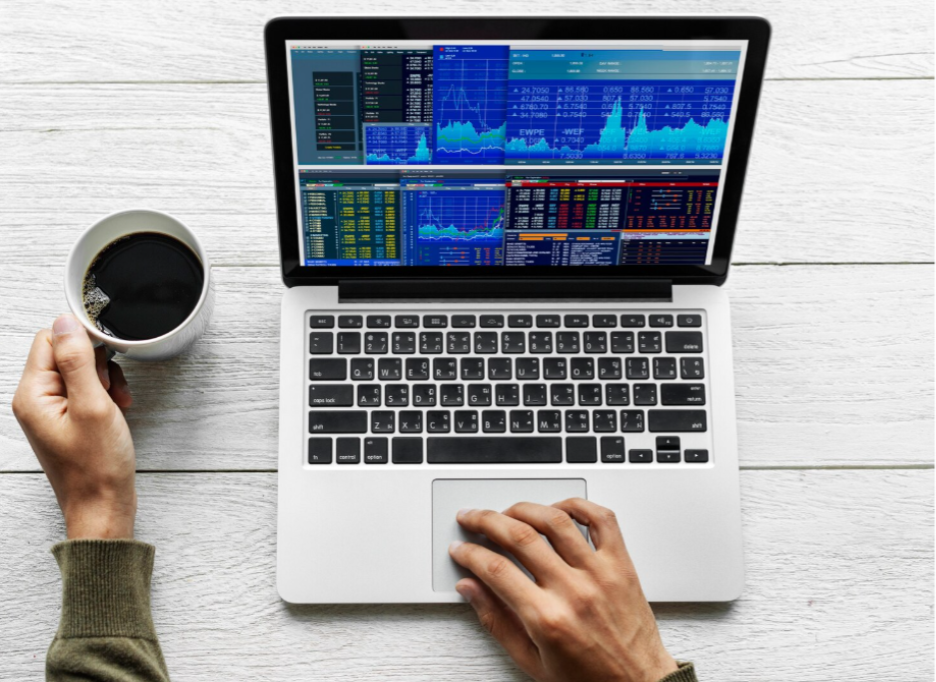
Electronic Communication Network (ECN) brokers may access a pool of liquidity providers, including financial institutions and banks, directly connecting the traders to them. Standard supply and demand are real-time, which creates variable spreads.
ECN brokers typically charge a commission rather than profiting from spread markups. This structure offers high transparency and is often preferred by experienced traders.
Because pricing reflects actual market conditions, spreads may widen during periods of low liquidity or high volatility. Research on market microstructure shows that direct market access improves price discovery and execution efficiency in active markets.
ECN brokers would be especially appropriate for scalpers and high-frequency traders who need rapid execution and minimum latency. Advanced trading can be supported with a real-time trading option where the market prices have been adjusted instantly.
Hence, ECN models offer the closest simulation of the institutional trading environment to traders who intend to simulate it.
3. STP Forex Brokers
Straight Through Processing (STP) forex brokers route client orders directly to external liquidity providers without operating a dealing desk. The broker does not take the opposite side of trades, reducing direct conflicts of interest.
Pricing under the STP model is usually variable, with a small markup added to the raw spread. Execution quality depends on the number and quality of liquidity providers connected to the system. STP brokers are often suitable for traders who want market-based pricing without the complexity of full ECN environments.
STP brokers provide a hybrid solution to those traders who want to receive the true market prices but do not wish to pay high commissions. They may be suitable for those who trade moderate volumes or swing traders. STP brokers provide a viable compromise between transparency, cost, and accessibility by combining a simpler interface and variable spreads.
4. Hybrid Forex Broker
Hybrid forex brokers combine features from multiple execution models. Some trades may be internalized, while others are routed to external liquidity providers. The decision often depends on trade size, volatility, and market conditions.
This flexibility allows brokers to manage risk efficiently while offering competitive pricing. For traders, the experience may resemble a market maker during calm conditions and an STP or ECN broker during active markets. Transparency varies across providers, so reviewing execution policies is essential before committing funds.
Hybrid brokers are increasingly popular among brokers who serve diverse client bases. They allow smaller retail trades to benefit from internalized execution and lower costs, while larger or more complex trades access liquidity pools for tighter spreads. Traders who switch between short-term and long-term strategies may find hybrid brokers adapt well to their changing needs.
5. DMA Forex Brokers
Direct Market Access (DMA) forex brokers provide traders with direct entry to institutional liquidity pools. Orders are placed straight into the market, offering full visibility into pricing and market depth.
These brokers are typically leveraged by professional and high-volume traders. They require higher capital and charge commissions per trade. The advantage lies in precise execution and reduced interference. Academic research on execution quality shows that DMA environments reduce information asymmetry and improve transparency for active participants.
DMA brokers also allow traders to view the full order book, giving insight into market depth and potential liquidity at different price levels. This transparency is valuable for managing slippage and timing entries or exits. Advanced traders and institutional participants often rely on DMA to execute large trades efficiently while maintaining control over price exposure.
Conclusion
Forex brokers differ not just in features, but in how they connect traders to the market. Market makers, ECN brokers, STP brokers, hybrid models, and DMA brokers each serve different needs. Execution methods, pricing structures, and transparency vary significantly.
Understanding these differences allows traders to choose a forex broker that aligns with their strategy and expectations. When the broker structure supports trading objectives, execution becomes more consistent and decision-making more confident. Considering trading style, risk tolerance, and required transparency is essential for long-term success in forex markets.

Other Articles